Bounce Houses
I have set up bounce houses in backyards, church parking lots, school fields, and one very sloped cul-de-sac that nearly beat me. After enough of these, you learn that a good party depends less on the inflatable itself and more on the ground under it, the power source nearby, and the number of kids you let on at once. This article covers what I tell every host before they book.
Start With the Space, Not the Theme
Most people pick a bounce house by the artwork on the front. I pick by footprint. A standard residential unit runs about 13 by 13 feet, but you need more than that. Plan on an extra two feet of clearance on every side, so a 13 by 13 unit really wants a 17 by 17 patch of open ground. Larger combo units with a slide can be 15 by 25 feet or more and need a lot more room than people expect.
For a closer look at bounce house rentals near me, the page linked here covers the details.
Look up as well. Low tree branches, power lines, and roof overhangs are the usual problems. I want at least 20 feet of vertical clearance for a standard unit, and more for tall slides. A branch that looks harmless can rub a vinyl seam raw over four hours.
Measure the gate too. A unit rolled up weighs anywhere from 150 to 400 pounds, and crews carry it through the side yard. If your gate is 30 inches wide, tell the rental company beforehand.
Check the Ground Before Anything Else
Flat grass is ideal. Slight slopes are survivable, but anything over about five degrees makes the unit lean and puts kids in a pile at one end. I have turned down setups on driveways that looked level but drained toward the street.
Concrete and asphalt are allowed when the unit is anchored properly, usually with sandbags and a ground tarp. Sandbags are heavy, often 30 to 50 pounds each, and you need several. Never accept a setup on pavement without a tarp underneath. Hot asphalt in July can soften and scuff the vinyl.

Before anyone arrives, walk the area and pick up sticks, rocks, and sprinkler heads. Sprinklers deserve a special warning. Turn the system off the night before, and mark the heads if you have pop-ups. A stake driven through a water line will ruin the afternoon.
Power and Anchoring Are Not Optional Details
Every blower needs a dedicated outlet. A typical blower pulls 8 to 12 amps, which is most of a 15-amp household circuit. If your hosts are running a popcorn machine and a speaker on the same line, the breaker will trip and the unit will slowly sag with kids inside. I ask for a standalone circuit whenever possible.
If the outlet is far away, use a heavy-duty outdoor extension cord rated for the load, 12-gauge and under 50 feet. Thin orange cords from the garage drawer overheat. Keep cord connections off wet grass and out of walking paths.
Anchoring matters even more. Stakes should be 18 inches long and driven in at every anchor point, which is usually six to eight per unit. Wind is the biggest safety risk with inflatables. The common industry cutoff is sustained winds around 15 to 20 mph, and I follow it strictly. If gusts pick up, kids come off and the blower gets shut down. I have seen a party host argue about this exactly once, and the wind made the case for me within ten minutes.
Know Your Capacity and Age Rules
Every unit has a posted capacity, and it is based on weight and space, not headcount alone. A 13 by 13 unit might hold six small children but only three or four teenagers. Mixing ages is where injuries happen. A seven-year-old and a twelve-year-old do not bounce the same way.
My rule is to group by size. Little kids, roughly three to six, go first or in their own time slot. Older kids get another. Rotating in 15-minute sessions works well and keeps the line from turning into a argument. Adults generally should stay off unless the unit is rated for them, and even then, not with children inside.
Other rules I enforce every time: no shoes, no glasses, no sharp objects in pockets, no silly string, no food or gum, and no flips. Flips cause more broken wrists and neck injuries than anything else. Someone must supervise at the entrance the entire time, not glancing over from the grill.
Choosing Between Dry and Water Units
Water slides and wet combos are wonderful in hot weather, but they add work. They need a garden hose with decent pressure, a drainage plan, and a place for the water to go. A slide running for four hours can put thousands of gallons across a lawn. If your yard already has soggy spots, you will end up with mud at the base.
Dry bounce houses are simpler and can be used in a wider temperature range. Wet units generally call for temperatures above 75 degrees, or kids get cold fast. I tell hosts to have towels ready and a dry zone for shoes.
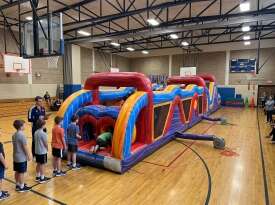
Obstacle courses are a third category and fit older kids and mixed groups well. They tend to be long, 30 to 50 feet, so check your space twice.
What a Professional Setup Looks Like
Setup should take 20 to 40 minutes. The crew should lay a tarp, unroll the unit, stake or ballast it, connect the blower, inflate it, and then walk the entire surface. They should check seams, stakes, the entry, and the blower tube for kinks. A good crew also walks you through the rules before leaving.
Be cautious about anyone who drops the unit and leaves in five minutes. Ask whether the company carries liability insurance and whether the equipment is inspected. Many states require inspection and commercial insurance for rental inflatables. A certificate of insurance should be available if you ask, and venues like parks or schools often require one.
If you are comparing options, searching for bounce house rentals near me is a reasonable place to start, but I would then look at what is actually included: delivery, setup, pickup time, tarp, sandbags, and whether the rental is by the hour or all day. I like all-day rentals because they remove the pressure to rush the party, and the price difference is often small compared with a short window.
Weather, Timing, and Backup Plans
Spring and fall in the Northwest can change within an hour. Check the forecast the day before and again that morning. Light rain is sometimes manageable for a water unit but not a dry one, since wet vinyl is slippery and the blower can pull in moisture. Lightning ends the session right away.
Ask about the rain policy before booking. Some companies reschedule for free and others charge a fee. Know the cutoff time for canceling, usually the morning of the event or the night before.
Schedule setup at least an hour before guests arrive. I have seen units go up while a crowd of impatient kids waited, and that is how someone gets hurt. Pickup should be timed after cleanup. Nobody wants a deflating house while parents are trying to find shoes.
Final Checklist Before the Party
Here is the short list I walk through myself:
- Measure the space and the gate, and check for overhead obstacles.
- Turn off sprinklers and clear the ground.
- Confirm a dedicated power outlet within 50 feet.
- Post the rules and assign one adult supervisor.
- Have a plan for wind, rain, and heat.
Bounce houses are among the simplest ways to make a party work for a wide range of kids. They are also equipment that rewards preparation. Plan the space, respect the wind, enforce the rules, and you will spend the afternoon watching kids have a good time rather than managing a problem.